
English| USD
Suggested for you
More currencies
Choose a language
Zermatt sits at the end of a dead-end valley, reachable by rail and almost nothing else. This geneva to zermatt train time guide sets out how the route is built, where the change happens, and why the 06:00–18:00 window matters more than most travellers expect. Every figure here comes from published rail information rather than estimates.
Quick answer
Trains run between Geneva Cornavin and Zermatt across the full service day, and the recommended travel window is 06:00–18:00, when daylight keeps the Alpine scenery visible. The route requires a change, usually at Visp. Entry to both stations is free at 0 CHF; a valid transport ticket is what the journey itself requires.
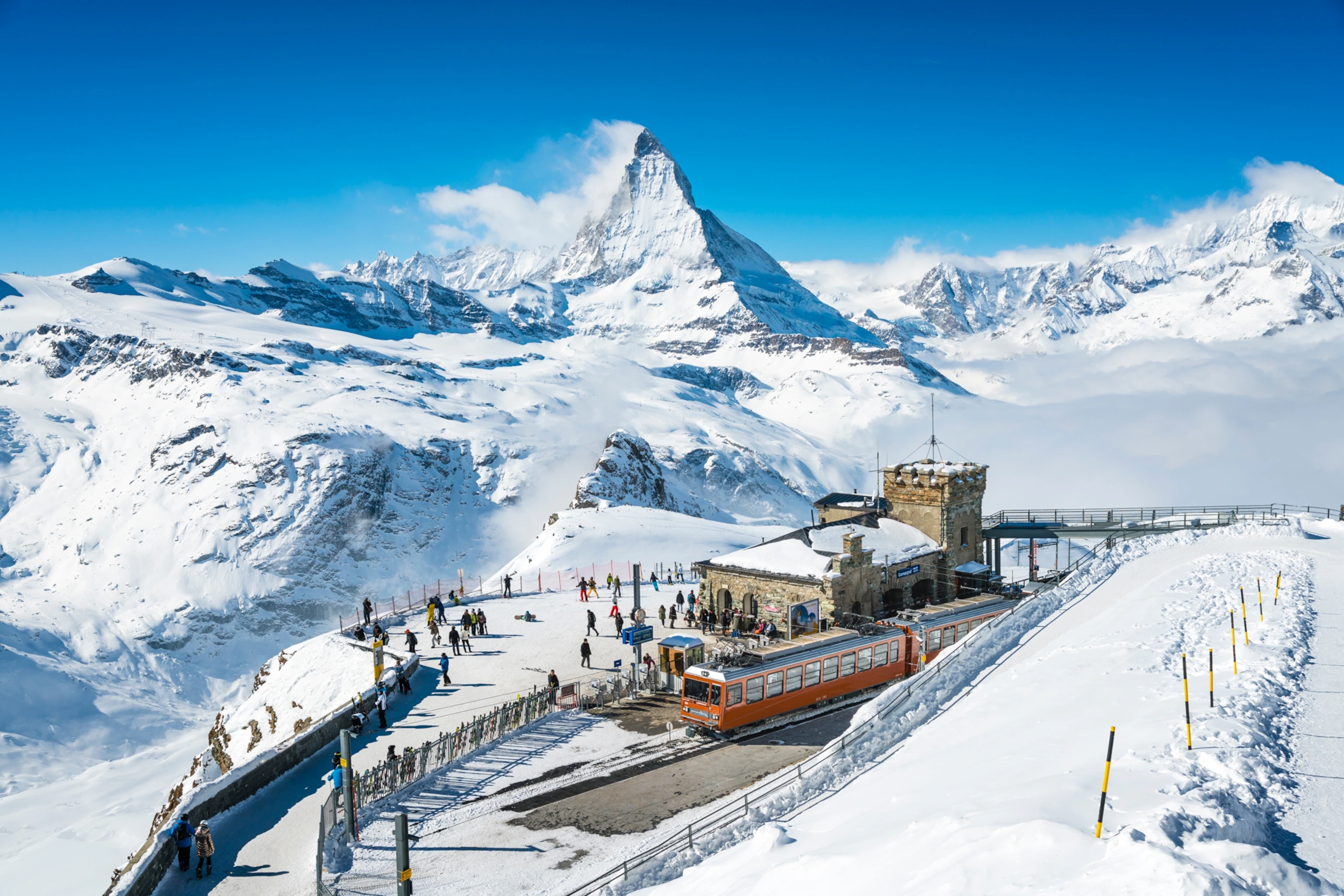
Zermatt has been closed to combustion-engine traffic for decades, which makes the railway less a scenic option than the only practical way in. Visitors driving from Geneva must abandon the car at Täsch and board a shuttle for the final valley climb. That single fact reframes the geneva to zermatt train time question entirely. The train is not the alternative to the road; it is the arrival. Understanding the shape of the route matters more than memorising a timetable, because the route determines everything else: where travellers change, which railway company carries them, and how much daylight they keep. The journey divides cleanly in two. The first half belongs to SBB standard-gauge track: out of Geneva Cornavin, along the northern shore of Lake Geneva through Nyon, Lausanne and Montreux, then inland into the Rhône Valley towards Visp and Brig. Vineyard terraces give way to industrial valley floor. The second half is a different railway altogether. The Matterhorn Gotthard Bahn runs narrow gauge from Visp up the Nikolaital, a steep-sided side valley that climbs past Stalden and St. Niklaus before delivering passengers to the car-free village at the foot of the Matterhorn. The change is the pivot of any Genève–Zermatt rail itinerary. It is usually made at Visp, on a well-signed platform, and it is short by design rather than by luck. Timing decisions follow from geography rather than preference. The recommended window of 06:00–18:00 exists because the most rewarding stretches, the Rhône Valley approach and the narrow-gauge ascent, are wasted in darkness, and in winter that darkness arrives early. Summer travellers in August have generous margins; February travellers do not. Both stations remain accessible around the clock, so late arrivals are possible, but a late arrival is a different trip from a scenic one. Planning also works backwards from the return. A day trip from Geneva compresses the mountain hours at both ends, and the last practical connection down the valley governs how long anyone actually spends beneath the Matterhorn. Travellers who intend to walk the Gornergrat line, ride up to Sunnegga, or simply eat lunch on a terrace should sketch the return before booking the outbound. Those with luggage should note that the narrow-gauge carriages are smaller than mainline stock, and that Zermatt station opens directly onto Bahnhofstrasse, where electric taxis and hotel carts wait instead of cars. Anyone researching geneva to zermatt train time should treat published departures as the working document and everything else as commentary. Timetables shift with the seasonal changeover, engineering work occasionally reroutes the Rhône Valley section, and connections are tighter on some departures than on others. SBB publishes current times at sbb.ch and staffs an information line on +41 848 44 66 88. Station access itself carries no charge, 0 CHF, while the journey requires a valid transport ticket. The booking pages on this site carry live departures and seat availability for the Geneva–Zermatt rail journey; the sensible sequence is to fix the outbound, confirm the change, then reserve.
“The train is not the alternative to the road; it is the arrival.”
This plan suits a first-time traveller riding the standard Geneva Cornavin to Zermatt route, which runs roughly 3 hours 40 minutes to 4 hours end to end with two changes. It traces the progression from the Lake Geneva shoreline through the Rhône Valley and up into the Matter Valley.
Board the InterCity heading east along the northern shore of Lake Geneva. Allow 10 minutes at Cornavin to find your platform, as departures use several tracks.
About 45 minutes of vineyard and lake views through Nyon and Morges. Sit on the right-hand side for the water.
Cross-platform transfer with roughly 8 to 12 minutes between trains. Signage points to the Brig-bound InterCity on the lower tracks.
Around 75 to 90 minutes climbing gently past Montreux, Aigle and Martigny with the valley walls closing in. Luggage racks fill quickly here.
Switch to the red Matterhorn Gotthard Bahn narrow-gauge train, usually a 10-minute connection on an adjacent platform.
The final 65-minute leg follows the Matter Vispa up through Stalden-Saas, St Niklaus and Randa. The gradient steepens noticeably after Täsch.
Step out into the car-free village; the Bahnhofstrasse begins directly opposite the station exit. Electric taxis and hotel shuttles wait at the forecourt.
The southbound journey repeats the two changes at Visp and Lausanne. Budget the same four hours when planning your day back to Geneva.
The best arrival window is 06:00–18:00, as these daylight hours provide consistent visibility of the Alpine landscape. Early morning departures are particularly effective for mountain photography due to the angle of the sun and lower light contrast.
Warm with temperatures near 20°C
Clear skies offer maximum mountain visibility for photography.
Cold, snowy with temperatures near 0°C
Expect frequent cloud cover and shorter daylight hours.
Variable, 10°C to 15°C
Often provides a balance of mild weather and lower passenger density.
—
Early travel avoids commuter peaks and provides the best lighting conditions for interior train viewing.
Verdict: The optimal slot for scenery and light is Tuesday to Thursday during the shoulder months of September or October, departing within the 06:00–18:00 arrival window.
The journey from Geneva Cornavin Station to Zermatt Station requires a transition between standard Swiss Federal Railways (SBB) services and the Matterhorn Gotthard Bahn line. Passengers typically transfer at Visp or Brig to board the regional train that climbs into the mountains.
SBB InterRegio/InterCity Geneva Cornavin to Visp or Brig
Matterhorn Gotthard Bahn from Visp or Brig to Zermatt
For the best scenic views of the Alps, aim for the best arrival window of 06:00–18:00. Please visit https://www.sbb.ch to confirm your specific connection times and ensure you have valid transport tickets before departure.
There is no entrance fee for the train journey itself, meaning the cost is entirely dependent on the required transport tickets purchased for your travel. You should consult the official SBB website for accurate fare information based on your specific travel date and class.
Verdict: The price for an adult varies based on travel class and the use of Swiss rail passes or discount cards.
The Swiss Federal Railways scheduling system is available 24 hours a day, seven days a week to assist with your travel planning. You may access information and departure times for the Geneva to Zermatt route at any time.
Everything you need to know about geneva to zermatt train time
The typical geneva to zermatt train time generally ranges between 3.5 to 4.5 hours depending on your specific connection. You can check the SBB website for real-time updates regarding your departure.
While you do not always need to book far in advance, checking the geneva to zermatt train time on the official SBB site ensures you have the most reliable schedule for your travel day. Tickets can be purchased online or at the station platforms.
There are usually no direct trains, meaning you will typically transfer in Visp or Brig. Always monitor your geneva to zermatt train time to ensure you allow enough buffer for these connections.
The best arrival window is between 06:00 and 18:00 to enjoy the scenic mountain vistas in daylight. This timeframe provides optimal visibility for the Alpine landscape along the route.
Entry to the village of Zermatt itself is 0 CHF, as it is a public municipality. However, you must purchase a valid transport ticket for the rail journey to reach the destination.
Yes, children are welcome on Swiss trains and often qualify for reduced fares or travel cards. Please check the SBB website for current family-friendly travel options.
The biggest mistake is ignoring the connection buffer at transfer stations like Visp. Ensure your planned rail transit aligns with the current timetable to avoid unnecessary delays.